
Customer Movers and Shakers Q2 2025
18 August 2025
Carole Layzell: Leadership, Digital Transformation and Creating Your Own Opportunities
29 January 2026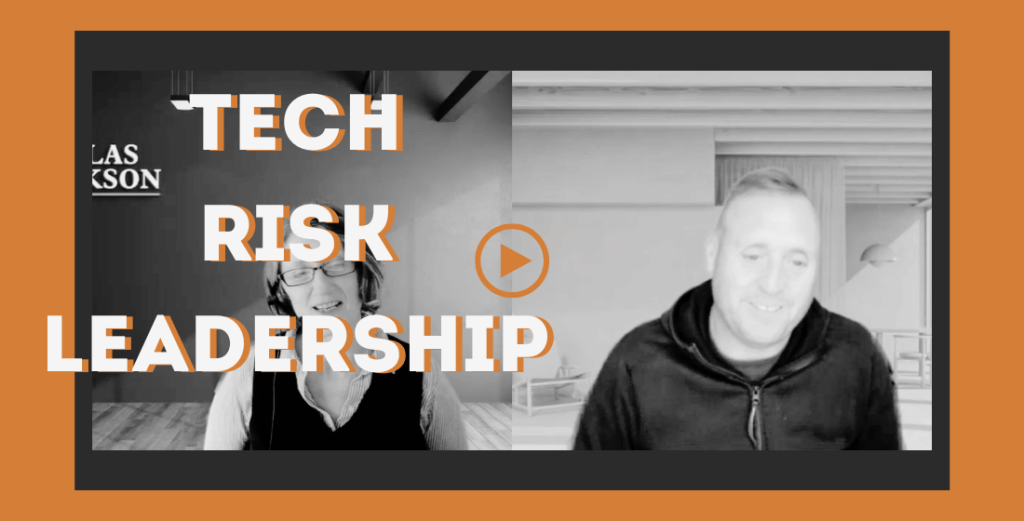
The Impact Room Leadership Podcast
Technology is now central to almost every business, but that does not mean every organisation needs — or can justify — a full-time Chief Information Officer.
In this episode of The Impact Room, Michelle Ansell speaks with CIO and fractional technology leader Lyndon Purnell about what a modern CIO actually does, why technology investment so often disappoints, the growing importance of cybersecurity and how fractional leadership can give smaller and mid-sized organisations access to senior expertise without the full-time cost.
The conversation also explores AI adoption, supplier relationships, technology value for money and why successful digital change depends as much on people and leadership as it does on systems.
Watch: Lyndon Purnell in The Impact Room
Prefer to listen?
What does a CIO actually do?
Lyndon gives a refreshingly straightforward definition.
A Chief Information Officer is responsible for making technology work for the organisation.
That can include infrastructure, cybersecurity, digital strategy, data, outsourced partners and the wider technology operating model. The role is not simply about owning IT; it is about ensuring that technology supports the organisation’s commercial and strategic objectives. The Impact Room CIO Fractional
He also distinguishes between CIO and CTO responsibilities. While there can be overlap, the CIO typically owns the broader technology environment, while a CTO is more likely to focus on technology development, applications and technical products. The Impact Room CIO Fractional
Technology spend does not automatically create value
Technology is an increasingly crowded market, with organisations surrounded by vendors promising similar solutions.
That creates two risks:
Overspending, and Investing without achieving a meaningful business return.
Lyndon talks about having stopped supplier relationships where money was continuing to flow without sufficient value being created. His argument is not simply to buy less technology.
It is to understand what the organisation actually needs, choose the right partners and be prepared to challenge spend that is not producing results.
The technology question is no longer simply “what can we buy?” It is “what value is this creating?”
Cybersecurity is now a leadership issue
Lyndon is equally direct about cybersecurity.
His view is that organisations should work on the basis that a cyber incident is a question of when, not simply if.
For smaller organisations in particular, the consequences can be severe because they may not have the resources available to absorb prolonged disruption. The Impact Room CIO Fractional
The practical starting point is not necessarily a huge investment. It is understanding the organisation’s risk profile:
- How secure are laptops and desktops?
- How is cloud infrastructure configured?
- Where are the vulnerabilities?
- How prepared is the business to respond?
- Can it recover quickly if something goes wrong?
A CIO can provide that visibility and help prioritise the areas that genuinely require investment.
Why fractional CIO leadership is growing
Lyndon describes fractional leadership simply as senior expertise provided for a defined amount of time rather than through a conventional full-time role. The important part is not the number of hours.
It is how quickly that leader can integrate into the organisation, understand what is happening and produce useful recommendations. The Impact Room CIO Fractional
That makes fractional leadership particularly relevant to organisations that need senior technology expertise but do not need, or cannot justify a permanent CIO.
And his view on the value proposition is strong:
A company may only need a highly experienced CIO for a day or two a month if those days provide the judgement and expertise necessary to make much better technology decisions.
What should happen in the first 30 days?
Lyndon argues that a fractional CIO should be able to develop a strong understanding of the organisation within around 30 days.
That involves talking not only to senior leadership but also to employees, suppliers and potentially customers.
The goal is to understand how technology actually performs in practice rather than relying solely on what systems or management reports suggest.
With stakeholder access, honest feedback and supporting evidence, a CIO should be able to produce an assessment and initial recommendations within that period. The Impact Room CIO Fractional
Future technology leaders cannot know everything
Lyndon also challenges the expectation that senior leaders should personally understand every emerging technology.
His view is that effective leaders need to be open-minded, curious and willing to bring in expertise.
With AI and technology evolving so rapidly, leaders who assume they already know the answers risk falling behind. The Impact Room CIO Fractional
The better approach is to understand enough to ask good questions, then work with experts who can help the organisation move forward.
Start small rather than chasing the silver bullet
There is another very useful transformation message here. Lyndon talks about organisations becoming distracted by enormous technology promises when incremental improvement can create substantial value.
He gives the example of reducing a server-build process from around 16 weeks to six days. It did not happen instantly, but it represented significant progress.
His advice is: Start small, prove the improvement and build from there.
AI adoption is also a people issue
Lyndon believes organisations need employees to be actively engaging with AI rather than leaving it solely to technology teams.
That requires leaders to understand how employees feel about technology, where they need support and whether training or clearer policies are required.
Even relatively simple steps, such as an AI policy or basic training, can make a material difference.
His wider point is important:
Technology success depends on adoption, not simply implementation.
People remain one of the biggest cyber risks
Lyndon also highlights the human component of cybersecurity. Employees can inadvertently create vulnerabilities through phishing and other forms of manipulation, which makes education a critical part of cyber resilience.
He recommends relatively straightforward measures such as staff education and multi-factor authentication as practical ways to reduce risk without requiring enormous investment. The Impact Room CIO Fractional
In this episode
- What a modern CIO actually does
- CIO versus CTO
- Why organisations overspend on technology
- Choosing the right technology partners
- Cybersecurity and business resilience
- How SMEs can understand their technology risk
- What fractional CIO leadership really means
- What a CIO should achieve in the first 30 days
- Technology value for money
- The skills future technology leaders need
- Why leaders should not try to know everything
- Starting small with digital transformation
- AI adoption and employee engagement
- Reducing cyber risk through people and process
What CEOs, COOs and Boards should take away
Technology needs an accountable leader.
If technology materially affects operations, customers, risk or growth, somebody needs to connect it back to business strategy.
More spend does not guarantee better technology.
Strong technology leadership should challenge suppliers, assess value and prioritise investment.
Cybersecurity belongs in the boardroom.
It is not simply an IT issue; it is a business continuity and organisational resilience issue.
Fractional leadership can provide senior capability without permanent overhead.
For many SMEs and scaling organisations, access to judgement may matter more than having a full-time CIO.
Transformation does not need to begin with a huge programme.
Continuous incremental improvement can create significant value.
People determine whether technology succeeds.
AI, cyber and digital adoption all depend on employee understanding and engagement.
Key quotes:
“The job of a good CIO is to make technology work for a company.”
“It’s about giving really good advice based on your past experiences and your knowledge of today’s technology markets.”
“Don’t try and change the world today. Start small.”
About Lyndon Purnell
Lyndon Purnell is an experienced CIO and fractional technology leader with more than two decades of experience across technology, cybersecurity, data and digital strategy.
His work has included helping organisations scale, improve technology value, strengthen cybersecurity and align technology investment more closely with business priorities. The Impact Room CIO Fractional
Need senior technology leadership without a full-time CIO?
Douglas Jackson works with organisations appointing permanent, interim and fractional leaders across Technology, Data, Operations, Transformation and Strategy.
Whether the challenge is cyber resilience, digital transformation, AI adoption or technology leadership, we help organisations identify senior talent able to turn technical capability into business value.
Talk to us about your technology leadership requirements →
Related Links:
Operational Support / AI & Data Recruitment
Executive Search
Retained Executive Search
Transformation Leadership