Thomas Moore: Modern Operational Leadership, AI and the Future of Customer Operations
6 February 2026
Operations Director Recruitment for a Utilities Wholesaler
25 February 2026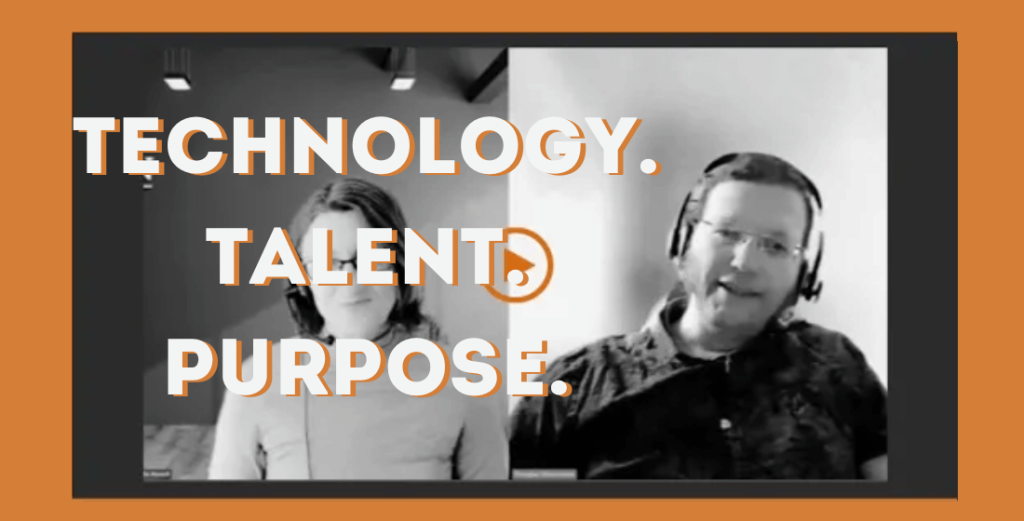
Housing Association Technology Leadership: The Impact Room Leadership Podcast
Technology is becoming fundamental to almost every major challenge facing Social Housing.
Repairs. Building safety. Damp and mould. Customer experience. Data. Development. Productivity. Digital inclusion.
But having better technology is only one part of the equation.
Housing organisations also need the leadership, skills and culture capable of turning technology into better outcomes for residents.
In this episode of The Impact Room, Michelle Ansell talks with Douglas Silverstone, Director of Technology at Southern Housing, about Technology leadership, AI, talent, diversity and why Social Housing may have a much stronger proposition for attracting senior Technology talent than the sector sometimes recognises.
Douglas brings experience across Technology, Data, Analytics and Information Security, including previous leadership roles within the Money and Pensions Service, alongside his work as a Trustee for digital inclusion charity AbilityNet.
Prefer to listen?
Technology in Housing Is Ultimately About Outcomes
It is easy for Technology functions to become separated from the purpose of the organisation.
Douglas takes a different view.
Technology teams in Housing may not be delivering repairs themselves or speaking directly with residents every day, but the infrastructure, systems and data they create influence how effectively those services can be delivered.
That becomes particularly important when the sector is dealing with issues such as:
- repairs and maintenance
- damp and mould
- building safety
- housing development
- resident communication
- regulatory requirements
- operational productivity
For Douglas, helping Technology teams see that connection matters.
Improving a platform or system is not simply a technical achievement.
If it allows a repair to happen faster or enables somebody to identify a resident who needs support, it contributes directly to the social purpose of the organisation.
Housing Has a Stronger Talent Proposition Than It Sometimes Realises
Housing organisations can sometimes worry about competing for talent against better-known or more highly paid sectors.
Douglas believes the sector has an important advantage:
purpose.
Having worked across banking, Government, charity and Housing environments, he describes Housing as offering an unusual combination of meaningful social impact, professional challenge and the ability to make change happen.
That proposition can be particularly powerful for experienced leaders who have already built successful commercial careers and increasingly want their work to have greater social meaning.
But Housing has to articulate that opportunity.
The sector cannot assume people outside it understand what a Housing Association does or appreciate the breadth of careers available within it.
Despite Social Housing being present in communities across the country, the sector can remain surprisingly invisible as a career destination.
Technology Could Help Address Wider Talent Inequalities
One of Douglas’s most interesting observations concerns the gender pay gap.
Higher-paid Technology and Development roles can remain disproportionately male, while other areas of Housing with significant numbers of women may sit within lower-paid operational functions.
Rather than treating this purely as a recruitment problem, Douglas sees potential in creating different career pathways.
Modern Technology functions increasingly need people who understand:
- customers
- operations
- contracts
- implementation
- business change
- stakeholder management
- service delivery
Those skills already exist elsewhere inside Housing organisations.
That creates an opportunity to help people move between functions rather than continually recruiting Technology talent from the same established talent pool.
The technical skills can sometimes be learned.
Deep understanding of the organisation and its customers can be considerably harder to replicate.
Apprenticeships Can Create Routes Into Technology
Douglas also talks about the potential of apprenticeships.
They can provide opportunities for people who might never have considered a traditional university-to-Technology career path and broaden the socioeconomic backgrounds represented within teams.
That matters particularly for Housing Associations.
If organisations want their workforce to better reflect the communities they serve, recruitment pathways need to reach beyond the traditional talent routes.
It also challenges one of the assumptions organisations can make about senior talent development:
there is not one correct career path.
AI Makes Business Understanding More Important, Not Less
The conversation inevitably turns to AI.
Douglas is candid about the speed of technological change and the challenge even experienced Technology leaders face in keeping up.
But there is an important distinction in his thinking.
As technology becomes easier to access, the differentiator increasingly becomes how intelligently organisations use it.
AI can support coding, analysis, productivity and learning.
But knowing what problem to solve, understanding the operating environment and recognising where technology can genuinely improve people’s lives remain fundamentally human capabilities.
Within Housing, this makes business knowledge even more valuable.
The challenge is not simply creating AI capability.
It is applying that capability to real problems affecting residents, employees and operations.
Technical Leadership Does Not Have to Mean People Management
Douglas also challenges a traditional assumption about career progression within Technology.
Excellent technical specialists are often promoted because they are technically brilliant.
Eventually they find themselves managing people rather than doing the work they were exceptional at.
That does not necessarily represent progression.
Organisations need to recognise technical leadership as a valuable discipline in its own right.
The person everybody eventually turns to when the organisation has a complex infrastructure problem is exercising leadership — even if they don’t manage a large team.
Creating credible career and reward pathways for those people allows organisations to retain deep technical capability without forcing individuals into management roles they neither want nor suit.
Neurodiversity Can Be an Important Technology Strength
Douglas also discusses neurodiversity within Technology teams.
Following a workshop involving Housing technologists, one of the observations was not merely that neurodiversity appears frequently within Technology environments, but that many of the characteristics associated with different ways of thinking can be enormously valuable.
Attention to detail.
Pattern recognition.
Creativity.
Problem solving.
Deep specialist focus.
Different ways of processing information.
The challenge for leaders is therefore not to make everybody work in exactly the same way.
It is to create enough flexibility for people to operate in ways that enable them to perform at their best.
Flexible Leadership Requires More From Leaders
That principle extends beyond neurodiversity.
Douglas describes how organisations invested considerable effort helping employees adapt when working patterns changed dramatically.
But as organisations moved back towards offices, some attempted to reinstate previous working practices without the same degree of cultural thought.
His view is that flexibility should be about outcomes rather than simply presence.
Different people perform well under different conditions.
That means leadership becomes more individual.
Some employees require structure.
Others perform better when given a problem and significant autonomy.
There may no longer be one management model that works across an entire team.
That places greater responsibility on leaders to understand their people.
What Does Future Technology Leadership Look Like?
For aspiring CTOs and CDOs, Douglas’s advice is particularly relevant.
The answer is not to copy somebody else’s leadership style.
It is to develop an authentic leadership style based on your own strengths and values.
His recommendations include:
- lead with integrity
- understand your own strengths and gaps
- surround yourself with people who complement you
- build relationships beyond your immediate team
- find mentors and champions
- make your ambitions known
- take opportunities when they arise
Future Technology leadership will require technical understanding.
But at Executive level, the job increasingly becomes one of interpretation.
Leaders need to understand why something is complex, what it will require from the organisation and how technical decisions translate into operational and strategic outcomes.
Attracting More Diverse Technology Talent
For employers wanting to broaden the people entering Technology and STEM roles, Douglas returns repeatedly to one idea:
flexibility.
Rigid job specifications and assumptions about working patterns can eliminate capable people before a conversation has even started.
Could somebody work four days?
Could someone returning from maternity leave work differently?
Could somebody with excellent transferable capability succeed despite not having exactly the experience described in the specification?
The objective is not to lower standards.
It is to stop unnecessary rules eliminating people who could meet them.
As Douglas argues, organisations need leaders prepared to challenge decades of inertia around how jobs are designed and how people are expected to work.
The Housing Leadership Signal
Technology is becoming too important to Social Housing to remain solely a Technology conversation.
It now touches service delivery, residents, assets, regulation, workforce capability and organisational performance.
That means Housing organisations need leaders who can bridge:
Technology → Operations → People → Resident Outcomes
They also need to think differently about where those leaders and skills come from.
Some will come from traditional Technology careers.
Some may come from outside Housing.
Some may already be sitting elsewhere inside the organisation waiting for somebody to recognise the capability they could bring.
For a sector facing significant transformation, that may be one of its biggest opportunities.
About Douglas Silverstone
Douglas Silverstone is Director of Technology at Southern Housing, with senior leadership experience spanning Technology, Data, Analytics and Information Security.
He has worked across Housing, Government, Financial Services and the charitable sector and is also a Trustee of AbilityNet, supporting digital inclusion for disabled people.
His leadership interests include using technology to improve organisational and social outcomes, developing diverse Technology talent and creating environments in which people can perform at their best.
Building the Leadership Capability for the Future of Housing?
Douglas Jackson works with Housing Associations and wider Social Housing organisations appointing senior leaders across Operations, Customer, Transformation, Technology, Data and Executive leadership.
We help organisations define the capability they need and identify leaders capable of turning strategy, technology and investment into better organisational and resident outcomes.
Talk to Michelle about your next Housing leadership appointment →