Interim CFO Recruitment for a B2B Utility Business
9 April 2026
COO Succession Recruitment for a Scaling Business Services Outsourcer
22 April 2026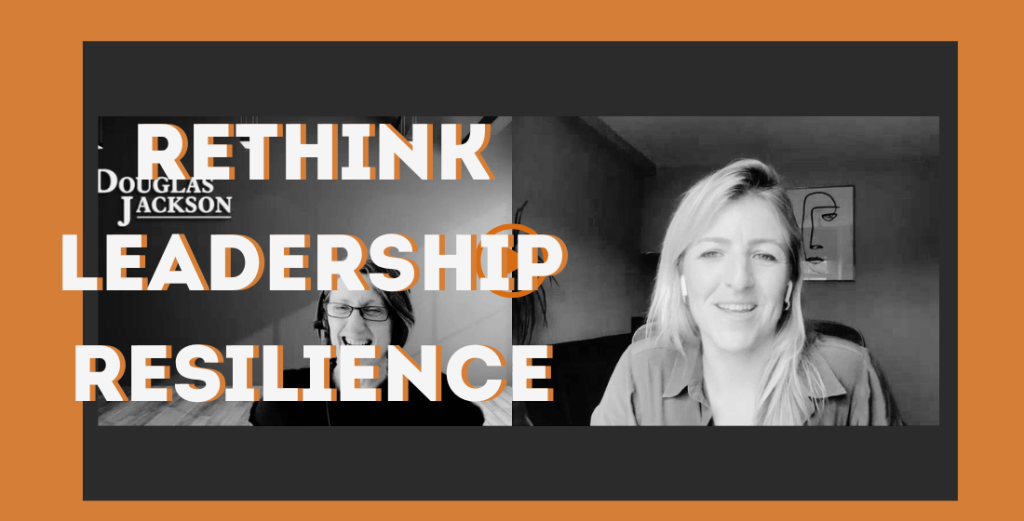
The Impact Room Leadership Podcast – former British Army Officer, Sandhurst Leadership Instructor, Founder of She Thrives
What if some of the behaviours we associate with high-performing leadership are actually making leaders less resilient?
Long hours. Constant availability. Putting everybody else first. Sleeping less. Pushing through stress. Never admitting that something is becoming too much.
They can look like commitment.
But sustained for long enough, they can also reduce the very capacity leaders rely on to make good decisions, manage pressure and lead other people well.
In this episode of The Impact Room, Michelle Ansell talks with Becca Meadows, former British Army Officer, leadership instructor at the Royal Military Academy Sandhurst and now Women’s Health and Leadership Consultant.
Drawing on almost 15 years in the Army and her subsequent work across leadership, nutrition and lifestyle medicine, Becca challenges some deeply embedded assumptions about resilience, self-sacrifice, success and what high performance really requires.
The conversation is particularly relevant to women progressing into senior leadership, but the central question applies much more widely:
Can we really separate the health of the leader from the quality of their leadership?
Prefer to listen?
Resilience Is Not Something You Either Have or You Don’t
Becca spent much of her Army career working in environments where leaders were expected to remain calm while dealing with pressure, uncertainty and large amounts of competing information.
One of the lessons she took from that experience is that resilience is not a fixed character trait.
It can be developed.
But importantly, it can also diminish.
She uses the analogy of a bucket.
Training, experience and exposure to pressure can increase the amount of stress somebody can hold before it overwhelms them. But leaders also need enough self-awareness to recognise when the bucket is becoming full and create space before more pressure arrives.
That second part is easy to overlook.
Organisations spend considerable time developing people’s ability to cope with pressure.
Perhaps they should spend more time developing their ability to recognise when coping is no longer enough.
Sometimes the Warning Signs Appear Outside Work First
Senior leaders can become extremely good at maintaining their professional presence.
They continue delivering.
Meetings still happen.
Targets still get discussed.
Other people may have no idea anything is wrong.
Becca believes some of the earliest warning signs that resilience is being stretched can therefore appear away from work.
Less patience.
Different reactions to family.
Strained relationships.
Feeling unable to cope with relatively small frustrations.
The professional mask stays intact because that is where much of the available energy is being directed.
It raises an interesting leadership question.
How good are we at spotting declining capacity before performance visibly fails?
Vulnerability Can Strengthen Leadership
Becca describes entering the Army determined to prove herself.
As a woman in an overwhelmingly male environment, moving roles approximately every two years and repeatedly establishing herself with new teams, that instinct was understandable.
But looking back, she believes some of that effort came at the expense of authenticity.
She hid vulnerability because she believed leadership required certainty and strength.
It is a familiar pattern outside the military too.
Someone gets promoted and suddenly feels they should have all the answers.
The more senior they become, the more uncomfortable they can become admitting:
I don’t know.
I need some help.
This isn’t one of my strengths.
Becca now sees vulnerability differently.
Knowing your strengths creates enough confidence to acknowledge the things you are less good at.
That can make a leader stronger rather than weaker.
What Stops You Asking for Help?
One question helped Becca understand her own resistance:
What stops you asking for help?
Her answer was revealing.
She believed people were watching and waiting for her to fail.
Once expressed openly, she could distinguish between a fact and a belief.
That experience became particularly important after returning to the Army following maternity leave.
Rather than ask the organisation to accommodate what she needed differently, Becca found herself more prepared to consider leaving than requesting help.
That has wider organisational implications.
Women do not necessarily leave because they lack ambition.
Sometimes they leave because the model within which they are expected to demonstrate ambition no longer works for their lives.
And sometimes organisations discover that too late.
The Problem with “Serve to Lead”
One of the most interesting parts of the conversation comes from Becca challenging an idea deeply embedded in her own military training.
Serve to Lead is the motto associated with Sandhurst and an important principle of military leadership.
There are clearly situations where leadership demands genuine self-sacrifice.
But Becca questions what happens when that principle becomes permanent.
Constantly putting everybody else’s requirements ahead of your own is not necessarily evidence of resilience.
Eventually it can erode it.
That distinction becomes particularly important for women who may already be carrying significant responsibilities outside work.
Leadership therefore requires both service to others and enough self-awareness to recognise when personal capacity needs replenishing.
The Superwoman Problem
We often praise women for being able to do everything.
Senior job.
Children.
Family responsibilities.
Exercise.
Social commitments.
Development.
Supporting everybody else.
The compliment sounds positive:
I don’t know how you do it all.
Becca questions whether this “superwoman” narrative actually helps.
Celebrating somebody for continually operating at maximum capacity can reinforce the expectation that this level of pressure is normal.
The individual is rewarded for coping.
The underlying system never gets questioned.
That is particularly relevant when organisations talk about supporting women into leadership while leaving many of the assumptions surrounding successful leadership unchanged.
There May Be No Such Thing as Perfect Work-Life Balance
Both Michelle and Becca challenge the idea that career, family, personal health and ambition should somehow sit permanently in equilibrium.
Life rarely works that neatly.
Different things move to the foreground at different stages.
The more useful objective may be to understand those rhythms rather than constantly feeling that you are failing to achieve an imaginary balance.
That requires organisations to think differently as well.
Career paths do not have to progress at the same speed throughout somebody’s working life.
An individual may need greater flexibility at one point and be capable of taking significantly more responsibility at another.
A career spanning 30 or 40 years leaves far more room for movement than our traditional linear model sometimes suggests.
What Does Success Actually Mean?
Becca spent much of her Army career with a straightforward definition of success:
Promotion.
Greater responsibility.
The next rank.
Eventually she began questioning whether that was genuinely her definition of success or simply the one provided by the organisation around her.
It is a useful question for senior leaders:
If nobody else were watching, what would success actually look like to you?
Without clarity on that, it becomes very easy to pursue somebody else’s definition.
More responsibility.
A bigger title.
A higher salary.
Another promotion.
Those things may absolutely matter.
But they are not automatically the answer.
Knowing what success means personally also makes it easier to decide what is essential and what can be let go.
Health and Leadership Are Not Separate Systems
This is the idea at the heart of Becca’s work today.
Leadership development traditionally concentrates on behaviour.
Communication.
Influence.
Decision-making.
Strategy.
Executive presence.
But the person displaying those behaviours still has a body.
Sleep, movement, stress and nutrition all affect how somebody experiences their working day and their available capacity.
Becca’s current work deliberately brings those areas together, helping female leaders and organisations consider physical wellbeing alongside resilient leadership and performance.
Her argument is not that wellbeing replaces leadership development.
It is that leadership development may be incomplete if it ignores the physical conditions under which somebody is expected to perform.
Women’s Health Is Also a Leadership and Retention Issue
The conversation goes beyond individual wellbeing.
It touches on maternity, parental responsibility, the motherhood penalty, menopause and the points in women’s careers where the expectations surrounding work can collide most sharply with other parts of life.
These are often treated as HR or wellbeing issues.
They are also talent issues.
Succession issues.
Retention issues.
And ultimately leadership issues.
If capable women repeatedly leave or slow their careers at predictable points, organisations should ask whether this is simply a matter of personal choice or whether the operating environment is contributing to those choices.
That distinction matters.
Sustainable Performance Is Still High Performance
There is sometimes an assumption that taking care of health, creating boundaries or acknowledging limits represents a lowering of ambition.
Becca argues almost the opposite.
The objective is not to make demanding jobs undemanding.
It is to build enough capacity to perform well within them without continually compromising health in order to succeed.
That makes this a performance conversation rather than simply a wellbeing conversation.
A leader who is chronically exhausted may still perform.
The more useful question is:
For how long, and at what cost?
The Leadership Signal
We have spent decades teaching leaders how to cope with more.
More responsibility.
More pressure.
More information.
More complexity.
Perhaps the next evolution of leadership development also needs to teach people when more is no longer the answer.
Resilience is not infinite.
Self-sacrifice is not the same as strength.
Vulnerability is not the opposite of leadership.
And looking after the individual doing the leading is not an indulgence.
It is part of creating the capacity from which good leadership happens.
The strongest leaders may therefore be those who understand not only how much pressure they can carry, but how to recognise when that capacity needs restoring.
About Becca Meadows
Becca Meadows is a Women’s Health and Leadership Consultant, former British Army Officer and former leadership instructor at the Royal Military Academy Sandhurst.
Today her work brings together leadership development, nutritional therapy and lifestyle approaches to help female leaders develop greater resilience and sustainable capacity.
Through She Thrives® and her wider consultancy work, Becca supports individual leaders and organisations across women’s health, stress, leadership performance and workplace wellbeing.
Building Leadership Capability That Lasts?
Douglas Jackson works with CEOs, Boards and senior leadership teams appointing leaders across Operations, Transformation, Customer, People, Data and wider Executive leadership.
Our work looks beyond experience and job titles to understand how leaders perform, adapt, influence and create sustainable impact within an organisation.
Talk to us about your next leadership appointment →