The Question Every Aspiring NED Should Be Able To Answer
2 July 2026
What Actually Predicts Leadership Success?
6 August 2026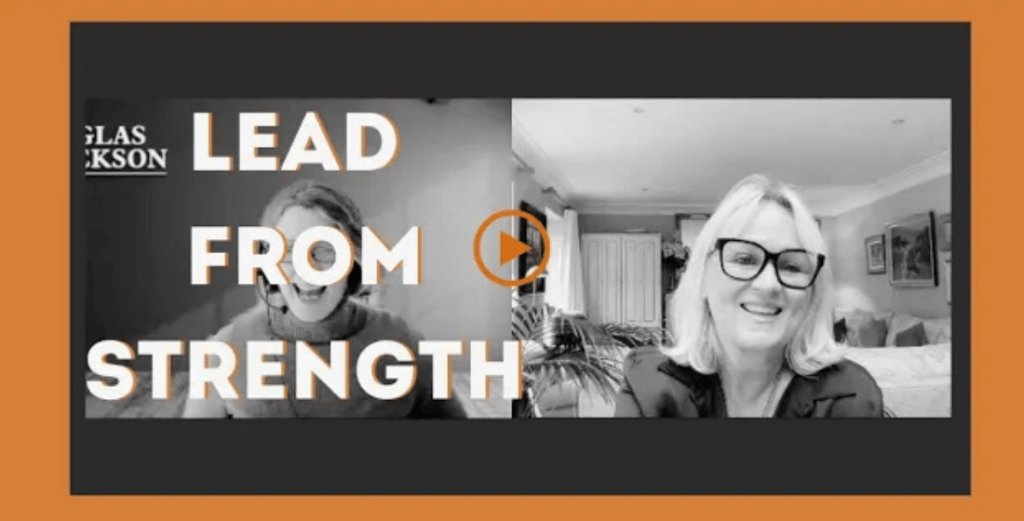
The Impact Room Leadersip Podcast Featuring Elke Edwards
Leadership is getting harder.
The pace of change has accelerated, expectations of leaders have increased and organisations are asking people to navigate complexity, uncertainty, hybrid work, multiple generations, cultural change and constant disruption — often while still expecting them to deliver stronger performance.
Elke Edwards believes the traditional leadership-development playbook is no longer enough.
In this episode of The Impact Room, Elke joins Michelle Ansell to explore why leadership needs to shift from strategies to strength, why so many capable leaders feel overwhelmed, and what organisations and individuals can do differently to build leaders who are able to thrive in uncertain environments.
Elke is an author, keynote speaker and founder of Ivy House, with a career spent redefining how organisations develop people and leadership capability.
Why traditional leadership development is struggling
Traditional leadership development has often been based around giving leaders tools, models and responses for particular situations.
But Elke argues that approach becomes increasingly difficult when the situations themselves are changing faster than organisations can prepare people for them.
Leaders cannot be trained for every possible scenario.
Instead, the challenge is developing people who can respond effectively regardless of what comes next.
Elke describes this as moving:
from strategies to strength.
Rather than giving somebody another playbook, the aim should be to help leaders operate from a position of clarity, calmness, creativity, collaboration and sound judgement — even when the environment around them is uncertain.
Leadership expectations have gone through the roof
Modern leaders are expected to understand and respond to an extraordinary range of issues.
They may be responsible for performance while simultaneously navigating:
- rapid technological change
- AI and automation
- multiple generations in the workforce
- hybrid and distributed teams
- inclusion and representation
- culture
- employee wellbeing
- geopolitical and economic disruption
- cyber risk
- changing customer expectations
And that is before they deliver the actual job.
Elke describes leaders she meets as frequently using words such as:
overwhelming, confusing, lonely and too much.
Her concern is not that leaders lack intelligence or commitment.
It is that the environment has changed faster than the way we equip people to lead within it.
From outside-in leadership to inside-out leadership
One of the strongest ideas in the conversation is the distinction between skills that are given to leaders from the outside and capability developed from within.
Elke argues that exceptional leadership increasingly requires people to understand:
What kind of leader am I actually built to be?
That means recognising natural strengths rather than simply trying to conform to a generic model of leadership.
Elke uses herself as an example.
Despite founding several companies, she says she has never wanted to be their traditional CEO because her strengths lie elsewhere — entrepreneurship, teaching, creating change and acting as a catalyst.
Leadership development therefore needs to help people understand where they create the greatest value rather than simply teaching everybody to behave in the same way.
The skill of learning
Elke believes one of the most underdeveloped leadership capabilities is something deceptively simple:
learning.
Not learning another framework or absorbing more industry information.
Learning how to enter a room without needing to prove you are right.
Learning how to remain curious.
Learning how to change your mind when presented with better information.
Learning how to say:
“I don’t know.”
Many leaders have spent their careers being rewarded for knowledge and expertise.
As they become more senior, that same attachment to having the answer can become a constraint.
The strongest leaders increasingly need to be motivated by learning rather than by winning an argument or protecting their position.
Leaders need space to think
Another powerful theme is distraction.
Elke asks leaders how much time they spend each day with no screen, music, conversation or other input.
For many, the answer is effectively none.
Yet clarity rarely emerges from greater noise.
Elke describes modern life as being increasingly characterised by constant stimulation and argues that leaders need to deliberately create quiet space if they are going to understand what they genuinely think, want and value.
Her phrase is:
“We have to get quiet enough to hear the whispers.”
Leadership therefore becomes partly about creating enough mental space to hear your own judgement rather than constantly consuming somebody else’s.
Taking ownership
Elke is also uncompromising about personal responsibility.
Her argument is that leaders can spend enormous amounts of energy attributing their state to external circumstances:
the boss, workload, organisation, family, economy, weather or whatever else is happening around them.
Those external events are real.
But Elke distinguishes the event from the meaning and thinking we attach to it.
Her challenge is for leaders to take greater ownership over how they respond.
This does not mean pretending difficult circumstances do not exist.
It means recognising the choices we still retain within them.
What happens when leaders operate from strength?
For Elke, the benefit is not simply greater personal wellbeing.
She sees a direct connection between an individual’s state and organisational performance.
Leaders who understand themselves and operate with greater clarity can become:
- more confident
- more creative
- more courageous
- better decision-makers
- more willing to have difficult conversations
- more able to create environments in which other people thrive
The ambition is not to create permanently high-energy leaders.
It is to help people operate more consistently from what Elke calls their optimum state.
Leadership and life are not separate
Perhaps the biggest challenge Elke makes to traditional leadership thinking is that organisations have separated the leader from the person.
Her view is:
to change how we lead, we need to change how we live.
Leadership is not something that begins when somebody enters an Executive meeting.
The first leadership responsibility is how somebody leads their own life.
That includes choices about energy, attention, boundaries, learning and how they respond to the environment around them.
Building a personal leadership brand
The conversation also explores Elke’s own transition from building organisations and brands behind the scenes to putting her own name and ideas more visibly into the market.
Her experience reinforces another increasingly important leadership capability:
personal brand.
Elke argues that senior leaders need to become clearer about what they genuinely stand for.
But that does not mean inventing a fashionable leadership phrase.
A credible leadership brand should come from something deeper:
What do you genuinely believe?
What would you talk about even if nobody paid you?
What issue would you be prepared to stand on a soapbox and argue for?
That is where differentiation and authenticity begin.
Who are you beneath the leadership persona?
For leaders trying to find greater clarity, Elke identifies three important areas.
Understand who you really are.
Strip away the roles, narratives and expectations you have accumulated and identify the qualities and strengths that genuinely define you.
Learn to listen to your own judgement.
Create enough space to recognise what energises you, what drains you and what feels aligned.
Take ownership.
Recognise that you retain choices about how you respond and what kind of life and leadership career you create.
These are not quick leadership techniques.
They represent a deeper way of thinking about development.
Preparing the next generation of leaders
The episode also explores what all of this means for future generations.
Elke challenges an education system built largely around knowledge acquisition at a time when knowledge itself is becoming increasingly accessible.
Future careers are likely to involve repeated reinvention.
That makes adaptability, learning, collaboration, self-awareness and judgement increasingly important.
For employers, this means thinking differently about the capabilities required from future leaders.
Technical expertise will still matter.
But so will the capacity to learn continuously, build relationships and operate effectively when the answer is not already known.
What leaders should take away
- The old leadership-development playbook is struggling to keep pace with modern complexity.
- Leaders cannot prepare for every scenario; they need the underlying capability to respond well when circumstances change.
- Self-awareness and understanding your natural leadership strengths matter.
- Senior leaders need to become comfortable not having all the answers.
- Learning, curiosity and judgement are increasingly important leadership capabilities.
- Constant distraction makes strategic clarity harder.
- Personal responsibility and ownership influence both wellbeing and performance.
- Leadership and life cannot be developed completely separately.
- A credible personal leadership brand comes from knowing what you genuinely stand for.
- Future leadership development needs to focus less on conformity and more on adaptability, judgement and human capability.
About Elke Edwards
Elke Edwards is an author, keynote speaker and leadership-development expert whose career has focused on transforming how people live and lead.
She previously founded Blue Sky Consulting, which worked internationally across leadership and management development, before founding Ivy House.
Through Ivy House and her own work, Elke has challenged conventional approaches to leadership development and advocated for deeper learning around self-awareness, personal responsibility, thinking and human potential.
Her current work focuses on helping leaders create extraordinary leadership by first understanding how they want to live and operate as human beings.
Find our more of follow Elke Edwards here: https://elkeedwards.com/
LinkedIn: https://www.linkedin.com/in/elkeedwards
Elke is also the author of The Friday Question, where she asks one question a week, to help you rise above the noise of your life, take a pause, and find the life you really want. https://elkeedwards.com/friday-question/
Elkes Book Extraordinary – How to Lead a Bigger Braver More Meaningful Life https://amzn.eu/d/5XmC0zT
Building stronger leadership capability?
Douglas Jackson works with organisations appointing senior leaders across Operations, Transformation, Customer, Strategy, Data and wider Executive leadership.
We help organisations identify leaders with the capability, judgement and adaptability required to operate successfully in increasingly complex environments.