Chief Transformation Officer Recruitment for a UK Building Society
5 March 2026
Key Trends in Data, Insight & Planning Leadership (2026)
18 March 2026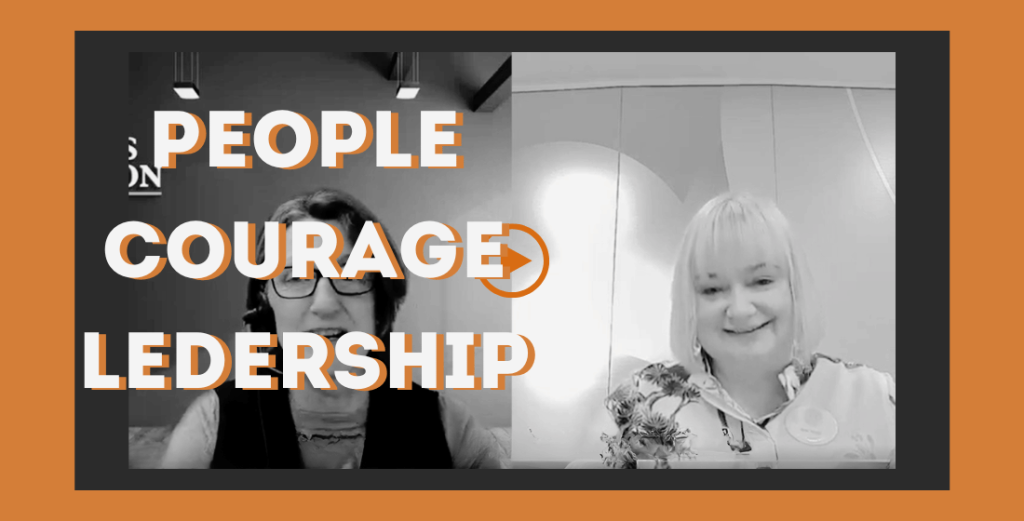
What should a Housing Executive team actually look like?
Should every senior leader come from the sector?
Should leadership development begin only once somebody becomes a manager?
And are organisations unintentionally limiting their talent pool by hiring for familiarity rather than difference?
In this episode of The Impact Room, Michelle Ansell is joined by Jane Smith, former Chief People Officer at Curo Group, whose career has included senior and global leadership roles across Housing, Telecommunications and Retail.
Jane’s career has taken her from BT, Mothercare, Harrods and Tesco to Social Housing — including a formative period working in South Korea as one of only two women within a 56-person Director population and the only non-Korean woman in the leadership group.
The conversation explores resilience, self-leadership, Executive team effectiveness, cross-sector hiring, learning cultures and why organisations need to think differently about how they build future leadership capability.
Prefer to listen?
Leadership Starts Before the Job Title
One of Jane’s strongest beliefs is that leadership should not be reserved for people with management responsibility or senior job titles.
Leadership begins with self-leadership.
That means individuals taking responsibility for:
- their behaviour
- their learning
- their development
- the impact they have on others
- the choices they make
Jane argues that organisations struggle when leadership is treated as something that begins only after somebody receives a promotion.
By that stage, many of the habits leaders need should already have been developing for years.
Building a Culture of Learning
For Jane, professional development should not be something that happens during an occasional training course.
It needs to become part of how the organisation operates.
One practical example from her own leadership approach is creating protected time for reflection.
Her leadership team would regularly consider:
- what they had learned during the week
- what had gone well
- what they would change
- what external insight they had gained
- what they needed to develop next
Those reflections were discussed alongside operational performance and strategic delivery.
That sends an important cultural signal.
Learning is part of performance, not something separate from it.
The Chief People Officer Should Be an Executive First
Jane also challenges a narrow interpretation of the Chief People Officer role.
She made an early career decision that she wanted to become a business-led People leader.
That meant deliberately developing operating experience as well as HR expertise.
Her view of the role is therefore clear:
Executive first. Functional leader second.
The Chief People Officer’s responsibility is not simply HR policy, recruitment, wellbeing or compliance.
Like every member of the Executive team, their primary responsibility is to help run the organisation successfully for the long term.
That requires understanding:
- the operating model
- business performance
- customers
- workforce dynamics
- strategy
- technology
- capability
- future organisational requirements
The functional expertise matters.
But it has to be applied in service of the organisation as a whole.
Is Your Executive Team Actually a Team?
Jane raises another question that applies far beyond the People function.
What kind of Executive team are you?
Is it a collection of functional leaders who meet periodically?
Or is it genuinely one leadership team collectively accountable for the organisation?
The distinction matters.
When Executives remain primarily attached to their own functions, problems can become fragmented.
People problems belong to HR.
Technology problems belong to IT.
Customer problems belong to Customer.
Operational problems belong to Operations.
But major organisational challenges rarely respect those boundaries.
The most effective Executive teams need to work collectively across them.
The CEO–CPO Relationship Matters
Jane describes the strongest CEO and Chief People Officer relationships as open, equal and appropriately challenging.
The CPO cannot simply become the person who tidies up difficult people issues after strategic decisions have already been made.
They need sufficient trust and standing to challenge assumptions and surface uncomfortable organisational truths.
That requires alignment between CEO and CPO from the beginning.
And it raises an important hiring question:
What type of People leader does this CEO and this organisation actually need?
Not every organisation needs the same CPO.
The right appointment depends upon the strategy, maturity, culture and leadership challenges ahead.
Why Hiring Outside Housing Can Add Value
Perhaps one of the most relevant parts of Jane’s story for Housing organisations is her own appointment into Curo.
She joined without direct Housing-sector experience.
And she sees that as a strength rather than a weakness.
Her Executive colleagues already possessed deep sector knowledge.
Had she brought exactly the same experience, much of it would simply have duplicated capability already around the table.
Instead, she brought experience from different organisations, markets and cultures.
That created difference.
And difference can be strategically valuable.
The question for an Executive appointment therefore should not automatically be:
“Do they already know our sector?”
It should also be:
“What does our Executive team not currently have?”
That is a fundamentally different approach to leadership hiring.
Sector Experience Can Become a Comfort Blanket
Housing is complex.
So are most sectors.
Regulation, customers, stakeholders, operating models and terminology all take time to learn.
But Jane challenges the assumption that senior leaders must always arrive already knowing every nuance.
At Executive level, organisations are often buying:
- judgement
- leadership range
- commercial understanding
- strategic capability
- curiosity
- adaptability
- the ability to challenge
- experience of solving comparable problems elsewhere
Sector expertise may be essential in some roles.
But requiring it automatically can dramatically narrow the leadership pool.
It may also result in Executive teams made up of people with increasingly similar experiences and perspectives.
Getting Comfortable With Being Uncomfortable
Jane’s international career provides a powerful example.
While working in South Korea, she found herself in an environment where almost everybody around the leadership table differed from her in nationality, gender, age and language.
It became one of the most challenging experiences of her career.
But also one of the most developmental.
Her conclusion is that people who genuinely want to understand others sometimes have to put themselves in situations where they are not comfortable.
Without experiencing difference, it is difficult to appreciate the world through somebody else’s lived experience.
That matters for leaders.
It builds empathy.
It develops adaptability.
And it forces people to understand themselves more clearly.
Job Sharing as a Leadership Strategy
Jane is also a strong advocate for job sharing.
She believes organisations often overlook it because they do not understand how to design or manage the arrangement properly.
Done well, a genuine job share can offer:
- two sets of thinking
- complementary strengths
- greater continuity
- broader problem-solving capability
- increased flexibility
- access to talent that might otherwise leave the workforce
Jane distinguishes between a job share, where two individuals genuinely own one role together, and a job split, where one role is divided into two separate sets of responsibilities.
The former requires deliberate design.
Shared objectives.
Shared accountability.
Clear communication.
And leaders who understand how to create the right environment.
Her experience has included some exceptionally high-performing job-share partnerships.
Flexibility Is Becoming a Leadership Capability
The broader point goes beyond job sharing.
Different life stages create different working requirements.
Parenthood.
Caring responsibilities.
Health.
Personal circumstances.
Changing career priorities.
Organisations that continue designing every senior role around one traditional working model risk excluding excellent people unnecessarily.
The leadership challenge is not to remove accountability.
It is to become more thoughtful about how work can be structured while preserving performance.
Lived Experience Changes Leadership
The conversation eventually returns to lived experience.
People do not enter workplaces experiencing the world in the same way.
Gender, disability, background, culture, socioeconomic experience and many other factors affect how somebody moves through both work and everyday life.
Inclusive leadership begins with curiosity about those differences.
Not assumptions.
Not believing that because something has never affected you, it therefore does not affect somebody else.
Jane’s challenge is simple:
ask, listen and remain curious.
What Housing Leaders Should Take Away
For Housing organisations facing major transformation, the leadership implications are significant.
Executive teams increasingly need:
- broader commercial and operational capability
- stronger cross-functional leadership
- different perspectives around the table
- learning cultures
- leaders comfortable challenging each other
- more flexible approaches to talent
- clearer succession and development pathways
And sometimes they need somebody who has not spent their entire career in Housing.
The strongest appointment may be the person who adds something the organisation does not already possess.
The Leadership Signal
When organisations hire senior leaders, familiarity can feel safer.
Same sector.
Same role.
Same type of organisation.
Same career path.
But the safest-looking appointment is not necessarily the one that creates the greatest value.
Sometimes the better question is:
“What capability and perspective is missing from the team we already have?”
Jane’s own appointment into Housing demonstrates the point.
She did not need to duplicate the sector knowledge already sitting around the Executive table.
She needed to add something different.
That may be one of the most important considerations for Housing Boards and CEOs building the leadership teams required for what comes next.
About Jane Smith
Jane Smith is a senior People and business leader whose career has included Executive and leadership roles across Housing, Telecommunications and Retail, including Curo Group, BT, Tesco, Mothercare and Harrods.
Her experience spans People leadership, Operations, Technology, Communications, Performance and Insight, with a particular focus on creating learning cultures, building leadership capability and connecting people strategy with long-term organisational performance.
Jane served as Chief People Officer at Curo Group until March 2026.
Building the Leadership Team Your Housing Organisation Needs Next?
Douglas Jackson works with Housing Associations and Social Housing organisations appointing CEOs, COOs, Chief Customer Officers, Chief People Officers and senior leaders across Operations, Customer, Transformation, Technology and Data.
We help Boards and CEOs define the capability their organisation actually needs — including when the strongest answer may sit outside the traditional Housing talent pool.
Talk to Michelle about your next Housing leadership appointment →
Related Content
Housing Association Executive Search